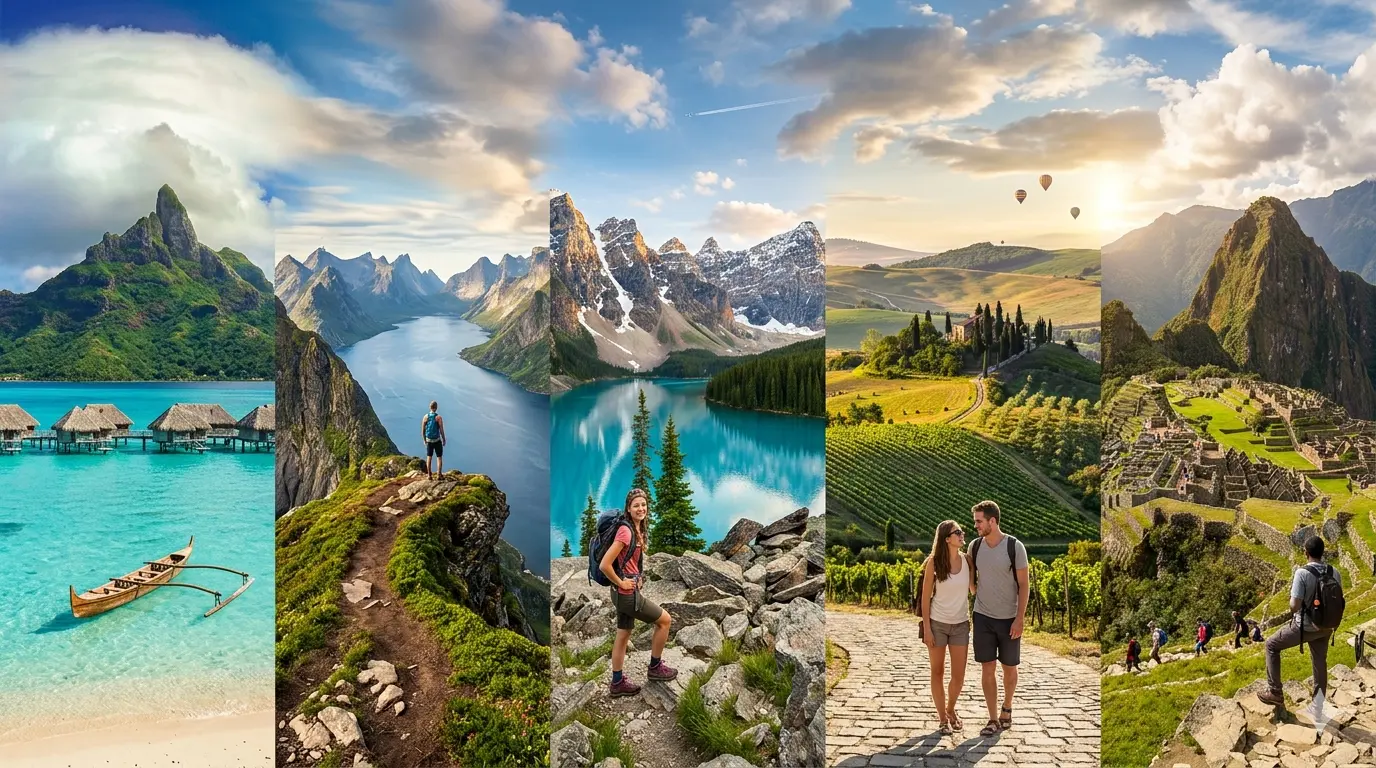
Every year, travel media publishes the same recycled shortlist. Santorini. The Maldives. New York. They are beautiful places. They are also, increasingly, places where the experience of visiting has been compressed and commoditised into something that looks better on a phone screen than it feels in real life.
So let's start from scratch. The best vacation destinations in the world — the ones that actually deliver — are chosen through a different logic. Not prestige. Not Instagram rank. But traveller-to-destination compatibility, value density, and what we'd call the "return rate" — the percentage of visitors who come back. That's the framework we're using here.
Best Vacation Destinations in the World You Must Visit
Portugal — the quiet overachiever of European travel
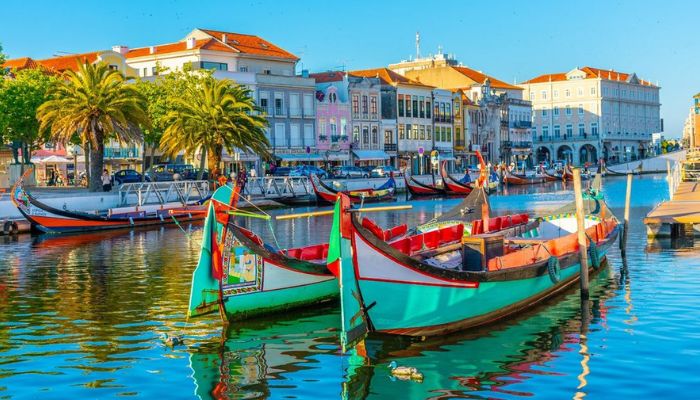
Portugal keeps appearing on best-of lists for a simple reason: it punches significantly above its weight class. Lisbon delivers the culture hit — tram rides through tiled neighbourhoods, Fado music in dim-lit tasca restaurants, pastéis de nata that cost €1.20 and taste like they should cost five times more. The Algarve delivers the coastline hit — limestone grottos, golden cliffs, and Atlantic surf that hasn't been privatised into oblivion.
Real-world scenario: A Berlin couple spending 12 nights in Portugal in September 2024 — four nights Lisbon, four nights Sintra/Cascais, four nights Lagos — came in under €3,100 total including budget flights. That included a boutique guesthouse in Lagos with a rooftop terrace. The same trip quality in France would have cost double.
Hot takeLisbon is overrated relative to Porto. Porto has better food, better wine, a more authentic street atmosphere, and half the tourist density. If you only have five days in Portugal, Porto deserves three of them.
You may also read :- Nuca Molas Travel Guide for First-Time Visitors | Complete Trip Planner
Croatia — where ancient walls meet Adriatic clarity
Croatia has moved in a decade from a hidden secret to a mainstream shortlist entry — and it still earns its place. Dubrovnik's walled city is genuinely one of the most beautiful places in the world to visit. Not in the curated, theme-park way; in the lived-in, real-human-beings-still-inhabit-this way. The Adriatic is the warmest, clearest sea in Europe. Plitvice Lakes National Park is what happens when geology and hydrology decide to show off simultaneously.
Hot takeGame of Thrones tourism has genuinely damaged Dubrovnik in peak season — daily visitor caps are in place because the experience was becoming unliveable. Visit in May or October. The walls are yours. The light is better. The prices are 30% lower.
Japan — the most counterintuitive recommendation on this list
Counterintuitive, because it reads as expensive, complex, and culturally impenetrable to first-timers. Wrong on all three. Japan's true cost — when you're eating at ramen-ya counters, riding the shinkansen on a Japan Rail Pass, and staying in well-designed business hotels — lands around $180–220/day for two. The complexity is front-loaded; once you're inside the system, it runs with a precision that removes the friction most destinations impose on you.
Real-world scenario: A solo traveller from Mumbai completed a 15-day Japan itinerary — Tokyo, Kyoto, Hiroshima, Osaka, Hakone — for under ¥280,000 (roughly $1,850 USD) on the ground. Accommodation: mix of capsule hotels and business hotels. Food: street markets, convenience store meals (genuinely excellent), and two sit-down meals daily. Total experience quality: the highest-rated trip of their life, by their own account.
Vietnam — the highest value-per-dollar destination on earth, currently
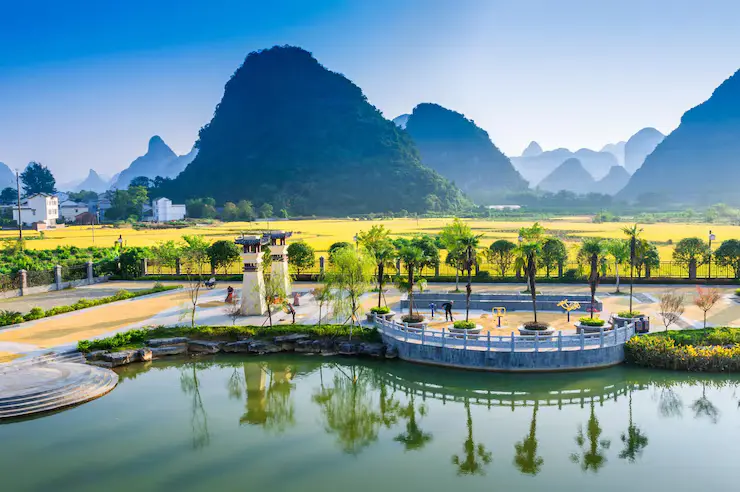
Vietnam is the answer when the question is "where do I go if I want to maximise every aspect of the trip without maximising spend?" The food culture alone is worth the airfare. Pho in Hanoi at 6am. Bánh mì from a cart for 30 cents. Hoi An's white rose dumplings. Bun bo Hue. The street food canon here is the equal of anywhere on earth. The coastline — Ha Long Bay, the beaches of Da Nang, Phu Quoc island — is magnificent. The cultural and historical depth is layered and complex.
Under-the-hood detail: Vietnam's north-to-south climate gradient means timing is destination-specific. Hanoi and the north: best October–April. Central coast (Hoi An, Da Nang): February–August. Southern Vietnam and the Mekong: November–April. Most travel guides flatten this into "dry season vs. wet season" — which is too crude. A trip that does Hanoi in November, central in February, and Ho Chi Minh City in March is threading the needle on optimal conditions across all three zones.
Bali, Indonesia — the family resort that's also a real place
Bali works at several price points simultaneously — that's what makes it remarkable. Budget travellers eat extraordinarily well for $8–12/day on food. Mid-range travellers access private pool villas for $80–120/night. Luxury travellers find genuine five-star resort infrastructure at 40–60% below equivalent Maldives or Seychelles pricing. The cultural architecture — Hindu temples, rice terraces, ceremonial culture — is not decorative. It's operational and ongoing. That's rare for a heavily touristed destination.
Colombia — the most dramatic travel rehabilitation story of the century
Colombia's transformation from one of the world's most dangerous countries to one of its most exciting travel destinations is genuinely one of the great narratives of modern travel history. Medellín — once synonymous internationally with a single very dark chapter — now runs one of the most innovative urban cable car transit systems on earth, hosts world-class contemporary art, and has a café culture and food scene that has quietly become exceptional.
Real-world scenario: A Chicago couple spent 16 nights across Bogotá, Medellín, Cartagena, and the Coffee Region in early 2025. Total on-ground spend including internal flights, accommodation, food, activities: $2,800. They described Medellín as "the most surprisingly sophisticated city we've ever visited." The Coffee Region — rolling green hills, fincas, and genuinely excellent single-origin espresso at source — they called "indescribable."
Costa Rica — adventure infrastructure meets genuine ecology
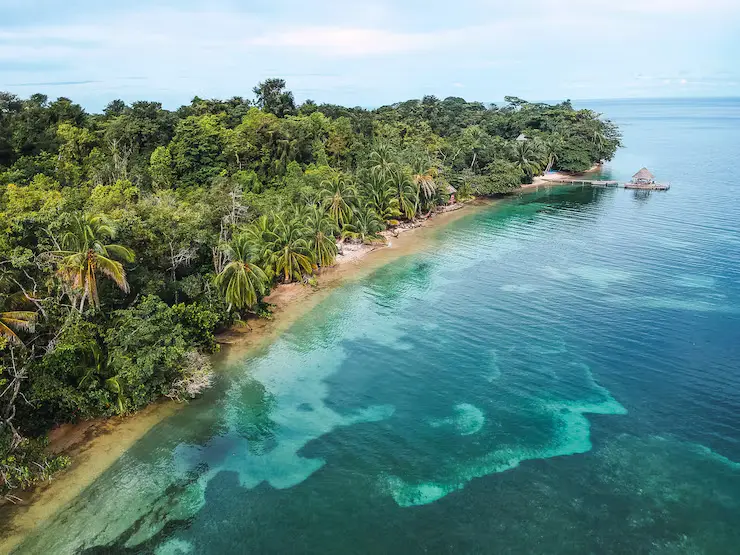
Costa Rica is the destination that proves "eco-tourism" can be a substantive promise rather than a marketing badge. Twenty-five percent of the country's territory is protected national park land. This isn't aspirational — it's operational policy. Which means the wildlife encounters are real: sloths in the canopy above your breakfast table at Manuel Antonio, scarlet macaws visible from the road in the Osa Peninsula, sea turtles nesting on Caribbean beaches at Tortuguero.
The world's best holiday destinations for families with a genuine nature focus come through Costa Rica consistently at the top, alongside New Zealand. And among the best countries to visit for vacation in the Americas with children, Costa Rica's combination of safety, English-language penetration, and adventure infrastructure makes it uniquely low-friction.
Morocco — sensory overload, strategically applied
Morocco is a destination that demands a particular kind of traveller. Not cautious. Not rigidly scheduled. But curious, physically adaptable, and comfortable with friction as a source of interest rather than anxiety. The medinas of Marrakech and Fes are genuine labyrinths — not metaphorically, but literally: streets designed over centuries to disorient invaders. They still work on tourists. Getting genuinely lost in the Fes medina is one of the most disorienting and rewarding experiences available to a traveller anywhere on earth.
Among the most beautiful places in the world to visit, the Sahara at Merzouga — dunes rising to 150 metres, absolute silence, a night sky unobstructed by any light pollution — ranks among the most frequently cited by travellers as "the moment that changed how I think about scale." The blue city of Chefchaouen. The Roman ruins at Volubilis. The cedar forests of the Middle Atlas. Morocco is encyclopaedic in a way that catches most visitors off guard.
Tanzania — the benchmark for wildlife travel, globally
Tanzania's Serengeti is where the word "safari" acquires its full meaning. Not the curated game-drive-at-6am-in-a-Land-Cruiser kind. The real, vast, unpredictable, genuinely wild kind — where the Great Migration moves 1.5 million wildebeest and 500,000 zebra across the Serengeti in a pattern that's been running for millennia, and you are simply a witness.
Add Zanzibar's Indian Ocean coastline — coral reefs, spice trade history, turquoise shallow water — and Tanzania delivers a two-destination trip that covers both wildlife and top beach destinations in the world within a single country itinerary. It is expensive. The premium is earned.
New Zealand — where the scenery is genuinely cinematic
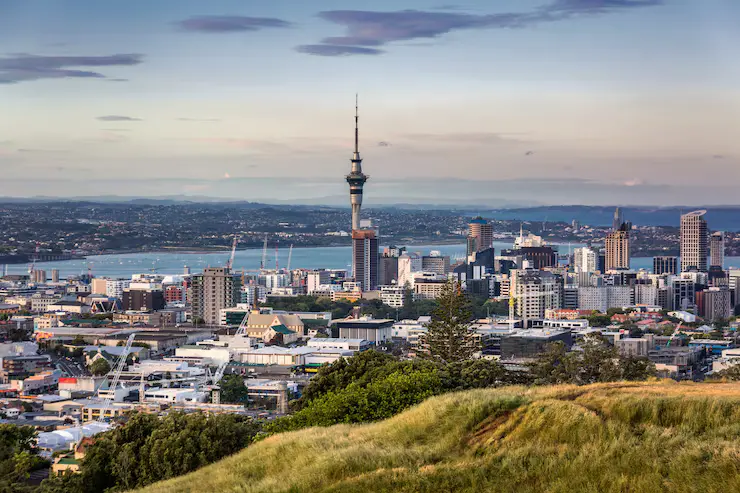
New Zealand earns its place on every serious "best vacation destinations in the world" list because it delivers at scale across almost every travel typology. Adventure travellers get Queenstown, bungee jumping, skiing, and white-water rafting within a 45-minute radius.
Nature travellers get Milford Sound, Mount Cook, and the volcanic plateau of the North Island. Cultural travellers get Māori culture — at Te Papa in Wellington, at the Waitangi Treaty Grounds, and at the many iwi-led cultural tourism operations that approach their heritage with obvious pride rather than tokenism. Family travellers get Hobbiton (it's genuinely excellent), Rotorua's geothermal parks, and the absolute safety profile of one of the most well-governed countries on earth.
World’s Top Beach Destinations for Your Next Vacation
Not all beach destinations are the same. Conflating "beach destination" into a single category is where trip-planning goes wrong. We split them into two distinct typologies with very different optimal traveller profiles:
- Resort infrastructure beaches — Maldives, Bali (Seminyak), Cancún, Phuket. Everything is set up for you. Watersports, beach clubs, sun lounger rental, cocktails on demand. If you want to turn your brain off, these deliver. If you want depth, they don't.
- Raw coastline beaches — Zanzibar, New Zealand's Abel Tasman, Vietnam's Con Dao islands, Croatia's Kornati islands, Portugal's Alentejo coast. Less infrastructure. More wildness. These are the top beach destinations in the world for travellers who want the beach to feel like a discovery rather than a product.
- Cultural-coast hybrids — Morocco (Essaouira), Sri Lanka (Unawatuna/Mirissa), Colombia (Cartagena), Italy (Puglia). The beach is part of a richer cultural surround. The world's best holiday destinations in this category are the ones where you could spend a week without going near the water and still have an extraordinary time.
The best places to visit in the world are, overwhelmingly, the ones where a single bad afternoon doesn't mean a ruined trip — because depth and variety absorb disruption. Plan for depth, not perfection.
Essential Travel Preparations You Shouldn’t Ignore
Travel insurance is the non-negotiable foundation
It gets cut from travel content because it's unsexy. It shouldn't be. A medical evacuation from Bali or Tanzania without coverage costs $15,000–90,000. A solid multi-trip annual policy for a family runs $350–600/year. The math is not close. Buy it the same day you book flights — pre-existing condition clauses, trip cancellation windows, and gear coverage all require early purchase to be valid.
The vaccination and health preparation gap
Most travellers underinvest in pre-trip health prep for destinations outside Western Europe. For Southeast Asia, Africa, and Central America: consult a travel medicine specialist at minimum 6 weeks before departure. Yellow fever vaccination (required for entry to several African nations), typhoid, hepatitis A/B, and malaria prophylaxis for specific zones are not optional extras. They're the baseline. Getting this wrong doesn't just affect health — it affects travel insurance validity.
The connectivity assumption
Reliable mobile data is no longer a premium — it's a navigational necessity, especially in countries where Google Maps street-level data is the difference between finding your guesthouse and being lost in a medina at midnight. For most top travel destinations worldwide, an eSIM (Airalo, Holafly) is cheaper and faster than local SIM acquisition. Buy before you fly. This is a $15–25 decision that eliminates one of travel's most common first-day friction points.
Frequently asked questions
What's the #1 best vacation destination right now?
There isn't one. Japan and Portugal keep winning surveys. Japan's more exciting. Portugal's cheaper and easier. Your call.
Which are the best countries to visit for vacation on a tight budget?
Vietnam, Morocco, Bali, Colombia. You eat good, sleep good, spend little.
What are the top beach destinations in the world for 2025?
Resorts? Maldives, Bali, Phuket. Wild beaches? Zanzibar, Abel Tasman, Croatia's islands. Beach plus culture? Cartagena, Essaouira, Unawatuna.
What are the best family vacation destinations in the world?
Japan, Bali, Costa Rica, New Zealand, Croatia. Safe. Kids eat. Lots to do. Easy to slow down.
What are the most beautiful places in the world to visit?
Serengeti at dawn. Milford Sound. Sahara night. Halong Bay sunrise. Plitvice. Faroe Islands. Kyoto cherry blossoms. No hype.