Places that are packed with tourists today? They weren't always dream destinations. Dubrovnik and Medellín used to mean war zones, not vacation selfies. Cambodia and Timor-Leste still show the cracks left behind by political chaos. Then you've got the opposite approach—Bhutan and the Maldives kept a tight leash on tourism from the get-go. Look at all of them together, and you start seeing a pattern. History, local ways of life, and a handful of tough calls have shaped exactly what ends up on a traveler's itinerary.
9 Places Tourists Love Today That Were Once No-Go Areas
1. Dubrovnik, Croatia
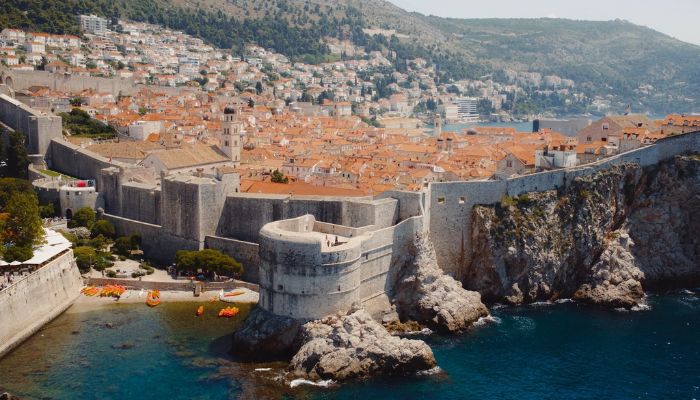
You know that old walled city on Croatia’s Dalmatian Coast—the UNESCO one? It’s turned into a total magnet for tourists in Europe. Back in 2019, nearly 1.5 million people crammed into its narrow, cobblestone streets. That works out to about thirty-six visitors for every single local. But things weren’t always so busy. When Croatia broke away from Yugoslavia in ninety-one, the Yugoslav People’s Army came down hard. They laid siege for months. From the hills around it, artillery shells hammered the old town—hundreds died, and buildings that had stood for centuries lay in pieces.
You may also read :- Places to Visit: The World is Full of Wonders
2. Timor-Leste
Timor-Leste, or East Timor, has never quite fit the mold. Back when Indonesia—including the western side of Timor island—was under Dutch control, the Portuguese held onto the eastern half. Then in 1975, just a heartbeat after finally breaking free from Portugal, Indonesia stormed in. What followed was a long, ugly occupation. For more than ten years, Fretilin, the local independence movement, waged a guerrilla war against Indonesian forces, who answered with ever more brutal crackdowns.
3. Karosta, Latvia
Karosta started out as a Russian Imperial naval base, right there on the Baltic Sea near what’s now Liepaja, Latvia. Tsar Alexander III had it built sometime between 1890 and 1906. Then the Soviets used it for their Baltic Fleet. For years, it was just this shut-off military town—one of the most secret places in the whole Soviet Union. People there were basically barred; it was off limits for everyone, even for the folks of Liepaja, just a couple miles away, who often went out to the beach at Karosta to forage for amber. That amber would wash up on shore.
4. Medellin, Colombia
In 1988, Time magazine called Medellin the most dangerous city in the world. This was pretty much the top of the Escobar years, when notorious drug lord Pablo Escobar used the city as a kind of staging area for a cartel. Running battles with the police, political assassinations, bomb blasts, and killings felt all too normal. By 1991, the homicide rate climbed to a wild 381 murders per 100,000 people, nearly 40 times higher than the UN’s yardstick for an epidemic of violence.
5. Cambodia
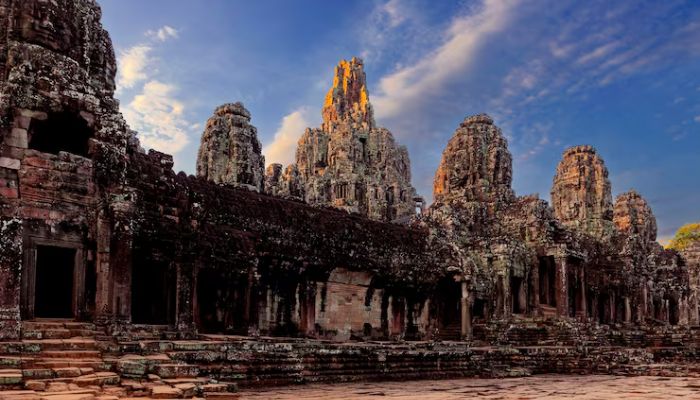
The Khmer Rouge only held Cambodia from 1975 to 1979, but in that brief window about two million people lost their lives, quietly. Their harsh boss, Pol Pot, said the country would begin fresh at “Year Zero”, as in emptying the cities, cutting off money, wiping out private property and worship, and compelling everyone to labor on countryside collectives. If someone labeled “an intellectual,” authorities executed them, but so many others just perished from starvation, illness, and exhaustion, once the whole social experiment, sort of obviously, went wrong. Today the land is still studded with “killing fields,” where the victims were laid to rest in huge mass graves.
6. The Maldives
The Maldives welcomed its first tourists in 1972. It was aware that many of its islands were so tiny, and also that there was a fear of too much outside influx or influence, so the government implemented a ‘one resort, one island’ policy in 1978. Most of these resorts occupied uninhabited islands, and the trip over to the more populated islands, like Hithadhoo or Fuvahmulah, was incredibly difficult, and frankly quite unusual.
7. Albania
Albania spent a big chunk of the latter part of the 20th century, kind of cut off from the rest of the world. Enver Hoxha, the communist ruler of the country, brushed away most of the major powers, and then he got so jumpy about invasion, like insanely, that he essentially drained the nation’s finances by building concrete bunkers along nearly every major road, border and seafront. Estimates differ a lot on the exact count of those bunkers—some people say 170,000, others 750,000 or more—and each bunker supposedly cost about the same as a two-bedroom apartment.
8. Sperrgebiet, Namibia
In 2004, officials turned the Sperrgebiet region into a national park—around 8,500 square miles (22,000 sq km). Most people call it Tsau Khaeb these days. They’ve partly opened it up to visitors, so you can wander in and come across abandoned mines, ghost towns half-buried in sand, and ship skeletons wrecked along the rugged coastline. Pretty quickly, experts realized it’s a huge biodiversity hotspot. The sea fog rolls in and helps more types of succulent plants thrive there than anywhere else on Earth. On top of that, Namibia’s first Marine Protected Area is here, so whales, dolphins, fur seals, and giant seabird colonies are everywhere you look.
9. Bhutan
Between 2012 and 2016, the number of visitors to Bhutan went up by 24%, but the country still holds onto its own identity. There aren’t any traffic lights. Government workers have to wear traditional clothes—a gho for men and a kira for women—during work hours. They only let TV happen in 1999, and even then, reluctantly. Anyone lucky enough to visit has to pay a pretty high daily fee, but the payoff is huge: incredible natural scenery, stunning Buddhist temples, and a culture where centuries-old traditions are still just part of daily life.
Conclusion
So here's the thing. After looking at these spots, you realize travel isn't really about postcard views or perfect weather. A bunch of these places went through hell. And that past doesn't just disappear—you can feel it in the streets, in the quiet moments, in the way people look at you. Some picked up the pieces after conflict. Some chose to shut the world out for a long while. A few just opened their doors a crack, slowly, carefully.
FAQ
Are they safe to visit now?
Mostly, yeah. Take Medellín or Dubrovnik—completely different places than they were a few decades ago. Tourists go there all the time now. That said, it never hurts to check the latest travel advice before you book anything.
Why is Dubrovnik always packed with visitors?
The old city is stunning and really well kept. Then you’ve got the coast right there. Plus, after it showed up in a few TV shows and movies, everyone wanted to see it for themselves.
What’s so different about Bhutan?
Bhutan actually tries to keep tourism in check. Visitors pay a daily fee, which sounds strange at first, but it’s their way of protecting the environment and their own culture. Keeps things from getting overrun.
Why are the Maldives resorts each on their own island?
That was the plan from the start—keep tourists separate from local life. Less disruption for the people who actually live there. As a bonus, visitors get more privacy and peace.
Is this kind of travel more about culture than just kicking back?
It can be both. You’ll find beaches and nature, sure, but there’s usually a heavier story underneath. That gives the whole trip more meaning without taking away the relaxation.